

Last Updated: November 8, 2026
Quick Summary
To maintain outdoor gear for longevity, clean it after every trip with mild soap and warm water, dry it completely before storage, and store it clean, dry and loose in a cool, shaded place. Inspect seams, zippers and waterproofing at the start and end of each season, and repair small problems before they grow.
- Never use household detergent, bleach or fabric softener on technical gear because they strip the durable water repellent finish.
- Store sleeping bags and quilts in a large cotton storage sack rather than a stuff sack.
- Clean zippers with a soft brush, then run a zipper lubricant along the track.
- Replace gear when repair cost approaches half the price of a new item.
- Reproof waterproof gear when water stops beading and starts soaking in.
Table of Contents
- Why Outdoor Gear Maintenance Pays Off
- How to Clean Outdoor Gear After Every Trip
- Drying and Moisture Control: The Step Most People Rush
- Backpack Care and Maintenance: Zippers, Buckles and Fabric
- How to Store Camping Gear So It Lasts the Off-Season
- Outdoor Gear Repair: Fix Small Problems Before They Grow
- Reproofing and Restoring Waterproof Performance
- Your Seasonal Gear Inspection and Maintenance Schedule
- Frequently Asked Questions
Why Outdoor Gear Maintenance Pays Off
Most outdoor gear fails for one reason: neglect, not hard use. A pack that gets cleaned, dried and stored with care can serve for years, while an identical one left dirty and damp often starts falling apart within a single season. Learning how to maintain outdoor gear for longevity is one of the most affordable ways to get more use from your kit.
The payoff shows up in three places:
- Money: you replace fewer items each year.
- Performance: waterproofing, zippers and straps keep working when you need them.
- Confidence: you trust your kit on longer, harder trips.
Repair data backs the value of early action. A survey cited in Trellis's case for repairing outdoor gear found that most repair needs were simple fixes, with cleaning dirt or stains, patching holes and mending tears topping the list. Small problems stay small when you deal with them fast.
If you are choosing a pack worth maintaining in the first place, our guide to the best men's travel backpack for business travel covers what to look for.
How to Clean Outdoor Gear After Every Trip
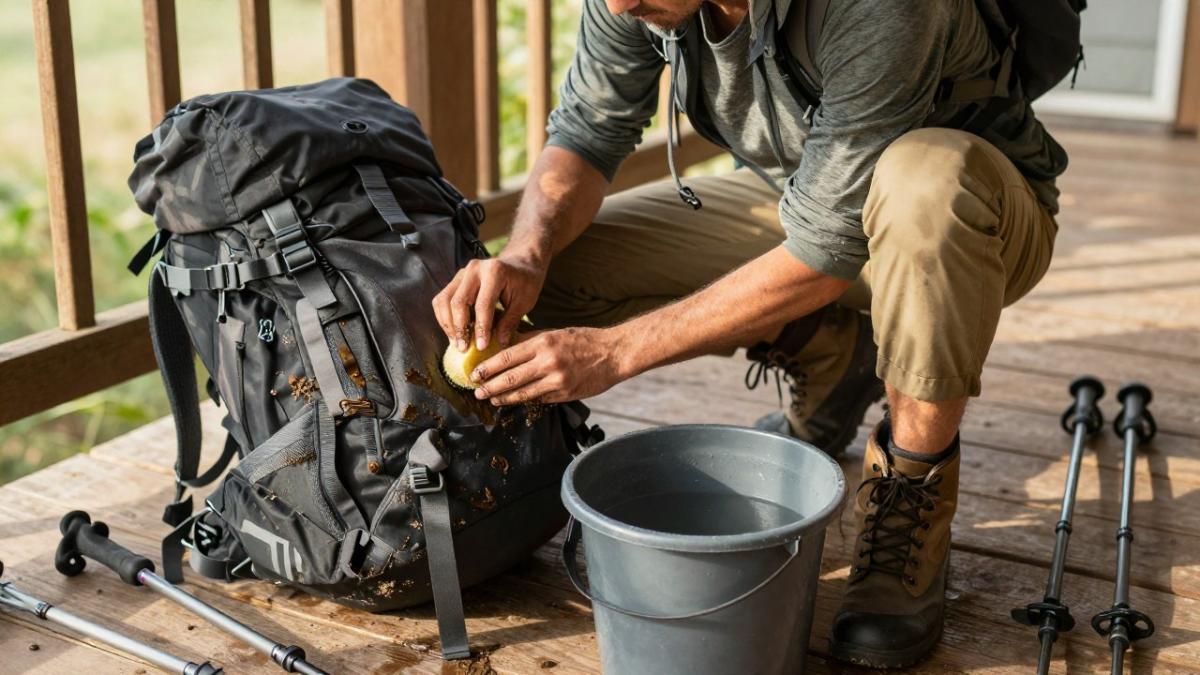
Clean your gear after every trip, not once a season. Dirt and sweat can hold moisture against the material, so a quick clean after each trip helps protect it.
Work through this routine:
- Empty every pocket and shake out loose debris.
- Brush off dried mud with a soft brush before it sets.
- Wipe the pack body, straps and hardware with a soft sponge and warm water.
- Spot-clean stains with a mild soap, then rinse well.
- Hang everything to air dry before it goes anywhere near storage.
Match the Cleaning Method to the Material
Different materials need different handling. Ripstop nylon and Oxford fabric tolerate a damp sponge and mild soap. Down products need gentle washing with a down-specific cleaner to protect loft. GORE-TEX and other waterproof membranes need rinsing and air drying, never heat.
Check the manufacturer instructions on the care label first. When in doubt, use less water and less soap, not more.
Skip Harsh Detergents and Chemicals
Never use household detergent, bleach or fabric softener on technical gear. These strip the durable water repellent finish and leave residue that traps moisture. A non-detergent soap is all you need for most cleaning jobs.
Drying and Moisture Control: The Step Most People Rush
Drying is the step that decides whether your gear survives the off-season. Moisture left inside a pack or sleeping bag becomes mold and mildew, and mildew damage is permanent.
Follow these rules:
- Air dry gear in a shaded, ventilated space.
- Open all zippers and turn pockets inside out.
- Hang sleeping bags and quilts loosely rather than stuffing them damp.
- Never store gear until it is completely dry.
Packing a damp tent or sleeping bag into a stuff sack can lead to mildew, so unpack and dry it the same day.
Backpack Care and Maintenance: Zippers, Buckles and Fabric
Zippers, buckles and metal components are the parts that fail first, and they are the easiest to maintain. Clean zippers with a soft brush to clear grit, then run a zipper lubricant along the track. Check buckles for cracks and replace any that look stressed.
For fabric, inspect high-wear areas like the base and shoulder straps for thinning or abrasion. A patch applied early beats a seam failure on the trail.
If you want a pack built for this kind of care, our 36L waterproof hiking backpack with trekking pole loops uses ripstop nylon with an integrated hydrophobic barrier and quick-release impact buckles. For heavier loads, the 35L tactical hiking backpack with MOLLE webbing is built from water-repellent Oxford fabric.


How to Store Camping Gear So It Lasts the Off-Season
Store camping gear clean, dry and loose. Stuff sacks compress insulation and trap any remaining moisture, so sleeping bags and quilts belong in a large cotton storage sack. Hang packs by a loop in a cool, dry location away from direct sunlight.
Keep these points in mind:
- UV exposure weakens fabric and coatings, so avoid a sunny shelf.
- A dry location with airflow beats a sealed plastic bin.
- Store seasonal gear separately so you can inspect it before each season.
Outdoor Gear Repair: Fix Small Problems Before They Grow
Repairing problems promptly often keeps gear in use longer. For trips that mix hiking and travel, a convertible tactical daypack is built to handle both. A pinhole in a waterproof shell, a frayed strap, or a loose buckle takes minutes to fix at home and becomes a trip-ending failure if ignored. The key is knowing which repairs you can handle and when to call a professional.

Common repairs and how to handle them
- Small fabric tears (under 2 inches): Clean the area, then apply a patch or repair tape such as Tenacious Tape or Gear Aid Tenacious Tape. For waterproof shells, use a patch designed for the fabric (e.g., Gore-Tex patches for Gore-Tex). Round the corners of the patch to prevent peeling. Press firmly and let cure according to the product instructions.
When to repair vs. replace
Repair is usually the right call when the damage is localized and the rest of the item is in good condition. Replace when the repair cost approaches half the price of a new item, when structural integrity is compromised (e.g., multiple seam failures, delamination of waterproof coatings), or when the gear no longer meets your safety needs. Simple repairs such as patching, buckle swaps and zipper lubrication can extend gear life.
Professional repair options
For complex repairs, consider a professional gear repair service.
Watch out: Using the wrong adhesive or patch on waterproof fabrics can create a leak or void the warranty, always test on a small area and follow the manufacturer's recommendations.
Reproofing and Restoring Waterproof Performance
Waterproofing fades with use, and that is normal. When water stops beading on your shell or pack and starts soaking in, the durable water repellent finish needs restoring (Restore the DWR of Your Raingear). Clean the item first, then apply a spray-on or wash-in reproofing product made for the material.
After reproofing, test by sprinkling water on the surface. Beading means the finish is working. Soaking means you need another coat.
Your Seasonal Gear Inspection and Maintenance Schedule
A simple schedule keeps gear longevity on track without turning it into a chore. Run this check at the start and end of each season:
- Inspect seams, straps and buckles for wear
- Clean and lubricate all zippers
- Check waterproofing and reproof if needed
- Wash and air dry sleeping bags and quilts
- Patch small holes before storage
- Confirm everything is fully dry before packing away
- Store in a cool, dry location out of direct sunlight
Run this checklist at the start and end of each season to keep gear longevity on track.
| Task | Frequency |
|---|---|
| Inspect seams, straps and buckles for wear | Start and end of each season |
| Clean and lubricate all zippers | Start and end of each season |
| Check waterproofing and reproof if needed | Start and end of each season |
| Wash and air dry sleeping bags and quilts | Start and end of each season |
| Patch small holes before storage | Start and end of each season |
| Confirm everything is fully dry before packing away | Start and end of each season |
| Store in a cool, dry location out of direct sunlight | Start and end of each season |
Gear that gets maintained is gear that keeps performing, and that is the whole point of buying well. Vanelys Trading curates durable outdoor gear built for exactly this kind of care, from waterproof ripstop daypacks to heavy-duty tactical packs with MOLLE webbing and wear-resistant Oxford fabric. Start with a pack worth looking after, then give it the routine it deserves. Get started with Vanelys Trading and carry gear that lasts season after season.
Frequently Asked Questions
How should I store a backpack between trips?
Empty every pocket, brush out crumbs and grit, and let the pack air-dry fully before storage. Store it loose rather than compressed, in a cool, dry location away from direct sunlight and UV exposure. Hang it by the haul loop or stand it upright so air circulates around the fabric. Avoid sealing a damp pack in a plastic bag, because trapped moisture encourages mold and mildew. A quick inspection of zippers, buckles and straps before you put it away catches small repairs while they are still cheap and easy.
How often should I inspect and repair outdoor equipment?
Give gear a quick check after every trip and a full inspection at each seasonal changeover. During the trip check, look for dirt, debris, loose stitching and worn zipper tracks. At the seasonal inspection, test buckles, check waterproof coatings, examine seams and review sleeping bag loft. Repair promptly rather than waiting: a small tear in ripstop nylon or a fraying strap is a five-minute fix, while a failed seam mid-hike can end a trip. Keeping a small repair kit with patches, cord and a needle makes this realistic.
How can I prevent mold and mildew on camping gear?
Moisture is the cause, so drying is the cure. Never pack a tent, sleeping bag or backpack away damp, even if you are tired at the end of a trip. Air everything fully, ideally in shade with good airflow, before storage. Store gear in a cool, dry location rather than a damp garage floor or a sealed bin. For down products, shake out loft and let them breathe. If you do find mildew, clean the item with mild soap and warm water, dry it completely, and check whether the coating or loft has survived before using it again.
What is the best way to clean outdoor gear without damaging waterproof coatings?
Use mild soap or a non-detergent soap with warm water and a soft sponge, following the manufacturer instructions on the care label. Spot-clean dirt, mud and grime rather than washing the whole item when you can. Skip harsh detergents, fabric softeners and bleach, which strip waterproof finishes and break down fabric fibers. Rinse thoroughly, since soap residue attracts dirt and can degrade coatings. For technical shells and waterproof materials, a dedicated tech wash is worth the small cost, and reproofing afterwards restores the water-repellent finish.
