

Last Updated: October 25, 2026
Quick Summary
An essential hair care routine for healthy hair is a small set of repeatable habits matched to your hair type, built around four jobs: cleanse the scalp without stripping it, condition the mid-lengths and ends, protect hair from friction and heat, and maintain the result with trims and gentle detangling. Wash when your scalp feels oily or itchy rather than on a fixed calendar.
- Most people wash somewhere between every day and twice a week, depending on hair type and activity.
- Detangle dry hair before water and work from the ends up, never root to tip.
- Trim every 8-12 weeks to remove split ends before they travel up the strand.
- Coily hair should be washed every 7-10 days or as needed, with a pre-poo treatment.
- Hair grows roughly half an inch a month, and no shampoo changes that.
Table of Contents
- What an Essential Hair Care Routine for Healthy Hair Actually Includes
- How Often to Wash Hair: Finding Your Cleansing Frequency
- Your Hair Washing and Conditioning Routine, Step by Step
- A Hair Care Routine for Different Hair Types
- How to Prevent Hair Breakage From Washing, Styling and Detangling
- Heat Protection, Trims and the Habits That Protect Hair Length
- Scalp Health, Water Quality and When to See a Professional
- What to Ignore: Realistic Expectations and Common Bad Advice
- Building Your Routine With Vanelys Trading
- Frequently Asked Questions
What an Essential Hair Care Routine for Healthy Hair Actually Includes
According to Highlight's haircare consumer insights for 2026, 72% of people use one to three hair-care products daily, and 48% use four to six every week. That is a lot of bottles for something most of us never actually plan. An essential hair care routine for healthy hair is not a shelf full of products. It is a small set of repeatable habits, matched to your hair type, that you can keep up with week after week.
The four jobs every routine has to do
Every routine, from a two-step wash to a full wash-day ritual, has to do four things:
- Cleanse the scalp without stripping it.
- Condition the mid-lengths and ends, where moisture is lost first.
- Protect hair from friction, heat and rough handling.
- Maintain the result with trims, gentle detangling and consistent habits.
Get those four right and the product list almost writes itself. Skip one and no expensive serum fixes it.
How Often to Wash Hair: Finding Your Cleansing Frequency
There is no universal wash frequency. A practical rule: wash when your scalp feels oily or itchy, not on a fixed calendar. For most people that lands somewhere between every day and twice a week, depending on hair type, activity and how much product you use.
The study on scalp hair health and hair care practices published in the Journal of Clinical and Diagnostic Research (2017) treats scalp care as central to hair condition and to preventing scalp and hair problems. That reframes washing as scalp maintenance, not just hair cleaning.
Signs you are overwashing (and signs you are not washing enough)
Watch out: overwashing often shows up as scalp tightness, flaking and hair that feels rough while wet. Under-washing looks different: visible buildup, excess oil at the roots and an itchy scalp by day three.
- Overwashing: tight, squeaky-clean scalp, frizz, split ends appearing faster
- Under-washing: heavy roots, product buildup, lingering odor, irritation
- Just right: scalp feels comfortable, roots have movement, ends stay soft
Your Hair Washing and Conditioning Routine, Step by Step
Here is the sequence we recommend, and it takes about ten minutes:
- Detangle dry, before water. Use a wide-tooth comb or a gentle detangling tool to loosen knots without pulling.
- Wet thoroughly and shampoo the scalp only. Work shampoo into the roots with fingertips, not nails.
- Rinse longer than feels necessary. Residue left behind is a common cause of dullness.
- Apply conditioner from mid-lengths to ends. Keep it off the scalp if you get oily quickly.
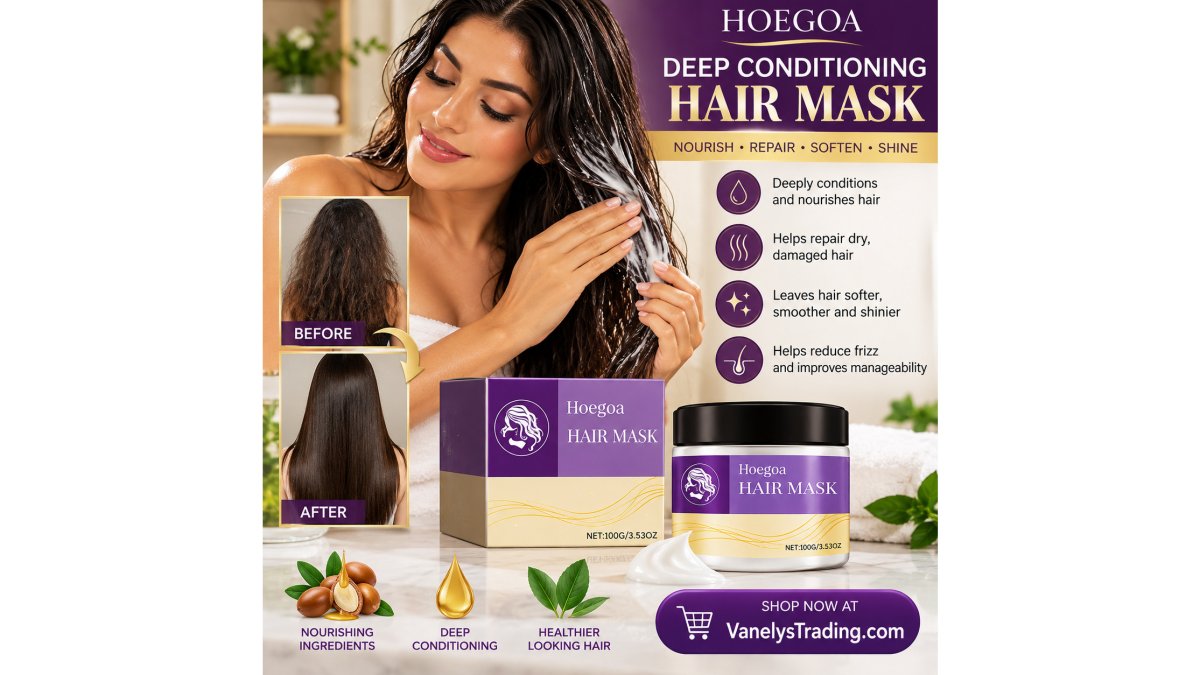
- Let it sit, then rinse cool. A weekly deep conditioning mask, such as the Hoegoa Deep Conditioning Hair Mask 100 G, adds an intensive step for dry or rough-feeling hair.
- Squeeze, do not rub. Blot with a towel and comb through gently while damp.
A Hair Care Routine for Different Hair Types
A hair care routine for different hair types changes at the product and technique level, not the habit level. Cleansing, conditioning and protecting stay the same; the formulas, frequency and application methods shift. The table below gives a starting point, but the subsections that follow explain the why so you can adapt it to your own hair.

| Hair type | Wash frequency | Key focus | Product approach |
|---|---|---|---|
| Straight, fine | Daily to every other day | Scalp cleansing, lightweight moisture | Sulfate-free shampoo, conditioner on ends only, avoid heavy oils |
| Wavy | 2-3x weekly | Moisture balance, frizz control | Gentle shampoo, lightweight conditioner, leave-in mist |
| Curly | 1-2x weekly | Moisture retention, definition | Co-washing or low-lather cleanser, rich conditioner, curl cream applied to damp hair |
| Coily | Every 7-10 days or as needed | Moisture retention, scalp care, protective styling | Pre-poo treatment, sulfate-free cleanser, deep conditioner, butter or cream sealant |
| Dry, damaged, chemically treated | 1-2x weekly | Repair and hydration | Moisturizing shampoo, deep conditioning mask weekly, protein treatment monthly if hair is porous |
Straight and fine hair
Fine hair has less diameter per strand, so oil travels down faster and weighs hair down quickly. Wash frequency can be higher here without harm. Keep conditioner off the roots, use a light moisturizing formula, and avoid heavy oils or butters that flatten volume. If you use dry shampoo, apply it at night so it absorbs oil while you sleep, then brush it out in the morning.
Wavy hair
Wavy hair sits between straight and curly: it needs more moisture than straight hair but less than curls. Wash 2-3 times weekly with a gentle shampoo, condition from mid-lengths to ends, and use a lightweight leave-in or mist to reduce frizz. Avoid brushing dry waves, which disrupts the pattern; instead, detangle in the shower with conditioner and scrunch gently with a towel.
Curly hair
Curls lose moisture faster and tangle more because the spiral shape makes it harder for natural oils to travel down the strand. Wash less often, condition generously, and define while damp. A lightweight curl cream, like the Jojoba Oil Curling Hair Qualitative Cream, helps shape curls and smooth flyaways without weighing hair down. Apply products to soaking-wet hair using the praying-hands method, then scrunch to encourage the curl pattern. Avoid terrycloth towels; use a microfiber towel or cotton T-shirt to reduce friction.

Coily hair
Coily hair is the most fragile texture and needs the most moisture and gentle handling. Wash every 7-10 days or as needed, and consider a pre-poo treatment (a light oil applied before shampooing) to reduce stripping. Use a sulfate-free cleanser, follow with a deep conditioner, and seal moisture with a butter or cream. Protective styles such as loose braids or twists reduce manipulation and breakage. Detangle only on wet, conditioner-coated hair, working in small sections from ends to roots.
Dry, damaged and chemically treated hair
Prioritize repair. A keratin-enriched treatment such as the Purc Hair Treatment Repair Damaged is designed for dry, frizzy, chemically treated hair. Use it as a rinse-out step once or twice a week, and keep heat styling to a minimum. If hair feels mushy when wet, it may need protein; if it feels stiff and snaps, it may need moisture. Alternate protein and moisture treatments rather than layering both at once.
Porosity: the variable most routines ignore
Porosity describes how easily hair absorbs and retains moisture. Low-porosity hair has tightly closed cuticles and resists moisture; use lightweight products and apply them to damp hair, and consider a warm-water rinse to help cuticles open. High-porosity hair has gaps in the cuticle and loses moisture quickly; use richer conditioners, leave-ins and sealants, and avoid over-washing. You can test porosity at home by placing a clean strand in a glass of water: if it sinks quickly, porosity is high; if it floats, porosity is low. This is a rough guide, not a diagnosis, but it helps explain why the same product works differently on different heads.
How to Prevent Hair Breakage From Washing, Styling and Detangling
Most hair breakage is mechanical, not chemical. Rough towel-drying, brushing wet hair and ripping through knots cause more damage than most people realize. The fix is friction reduction at every step.
- Detangle from the ends up, never root to tip.
- Use a gentle detangling tool. An air-cushion brush with rounded bristles, like the Electric Airbag Massage Comb With Mist Spray, loosens knots with less pulling.
- Never brush soaking-wet hair unless you are using a conditioner-loaded comb.
- Skip tight hairstyles that pull at the hairline.
- Sleep on a smooth surface to reduce overnight friction.
A common mistake is treating breakage as a product problem. In practice, it is usually a handling problem.

Heat Protection, Trims and the Habits That Protect Hair Length
If length retention is the goal, heat and split ends are the two biggest leaks. Use a heat protectant every time you blow-dry, straighten or curl, and keep the tool moving. Limit high-heat styling to once or twice a week.
Regular trims every 8-12 weeks remove split ends before they travel up the strand. This is the least glamorous advice in hair care and the one most often skipped.
A few drops of a finishing oil, such as the RtopR Moroccan Hair Essential Oil, can be added to shampoo or a hair mask, or used on dry ends to improve softness and shine.
PURC Repair Hair Mask Green Energy Keratin For Treatment Hair →
Scalp Health, Water Quality and When to See a Professional
Scalp health drives hair condition more than most routines admit. The 2017 scalp study supports treating the scalp as the foundation of hair care, and 2026 trend reporting from MDhair's dermatologist-approved hair trends points to scalp-first routines built around barrier support and microbiome-friendly cleansing. But scalp care is also where general routine advice tends to stop at "wash regularly" and "don't scratch." The practical triggers below are the ones most guides skip.
Water quality: hard water, chlorine and residue
Hard water contains dissolved minerals, mainly calcium and magnesium, that can bind to hair and leave a film. That film makes hair feel rough, dull and harder to detangle, and it can interfere with how well shampoos and conditioners lather and rinse. If you live in a hard-water area, a clarifying wash every few weeks helps remove mineral buildup. A shower filter is an option, though results vary; look for one labeled for hard-water minerals rather than a generic carbon filter. White vinegar rinses are a common home remedy, but they are acidic and can irritate a sensitive scalp, so dilute them well and do not use them on broken skin.
Chlorine from pools is a different problem: it is oxidizing and can strip natural oils and leave hair dry and brittle. Rinse hair with fresh water before swimming so it absorbs less chlorinated water, wear a swim cap if possible, and wash with a gentle shampoo afterward. A leave-in conditioner before swimming can add a light barrier.
Sun, seasonal dryness and environmental exposure
UV exposure breaks down hair protein and fades color, much like it affects skin. In summer, use a leave-in product with UV protection or wear a hat during long outdoor exposure. In winter, indoor heating and cold outdoor air create a dry cycle that leaves hair static and ends brittle; a humidifier and a weekly deep-conditioning mask help. Wind and friction from hats and scarves cause mechanical damage, so choose smooth linings and avoid tight bands.
Scalp care basics that actually help
- Cleanse the scalp, not just the hair. Shampoo is for the scalp; conditioner is for the ends.
- Don't scratch. If itching is persistent, scratching damages the skin barrier and can lead to secondary irritation.
- Massage gently. A few minutes of fingertip massage during washing supports circulation without pulling at the roots.
- Avoid heavy oils on an oily or flaky scalp. Oil can feed the yeast associated with dandruff in some people; if flaking persists, a shampoo with an active ingredient such as zinc pyrithione or ketoconazole may help, but check with a pharmacist or doctor first.
- Keep styling products off the scalp where possible, and wash them out fully.
A scalp-friendly oil, like the Hair Care Essential Oil, can support a gentle scalp massage routine, but it is not a treatment for a medical scalp condition.
When to see a professional
See a professional if you notice persistent scalp pain, sudden shedding, patches of hair loss, or irritation that does not settle. Those are not routine problems, and no product swap fixes them. Also seek advice if you have:
- Persistent itching or flaking that does not improve with over-the-counter dandruff shampoo after a few weeks.
- Redness, swelling or sores on the scalp.
- Sudden or patchy hair loss, especially with scaling or broken hairs.
- Scalp pain or tenderness without an obvious cause.
These signs can point to conditions such as seborrheic dermatitis, psoriasis, fungal infection or alopecia areata, which need proper diagnosis. A dermatologist or trichologist can assess the scalp and recommend treatment. Routine hair care supports scalp health, but it is not a substitute for medical advice when something is wrong.
What to Ignore: Realistic Expectations and Common Bad Advice
Hair grows roughly half an inch a month, and no shampoo changes that. Anyone promising dramatic growth from a single product is selling hope. The realistic levers are breakage prevention, scalp health and consistency.
Ignore these:
- "Wash less to train your hair." Scalp oil production is largely genetic.
- Biotin supplements for everyone. They help if you are deficient, not otherwise.
- A 12-step routine. Four jobs, done consistently, beat twelve products done occasionally.
- Skipping conditioner to avoid grease. Conditioner on the ends does not cause oily roots.
A balanced diet with enough protein, plus vitamins and minerals from food, supports healthy hair from the inside. That is the boring truth.
Building Your Routine With Vanelys Trading
Start with the four jobs, pick the formulas that match your hair type, and keep the steps you will actually repeat. That is the whole essential hair care routine for healthy hair, and it does not require a cabinet overhaul.
If you are building or refreshing your shelf, you can browse the full hair and beauty range to match products to your hair type and routine.
Frequently Asked Questions
What is an essential hair care routine for healthy hair?
It is a repeatable set of four steps: cleansing the scalp, conditioning the mid-lengths and ends, protecting hair from heat and friction, and trimming split ends before they travel up the strand. A 2017 study in the Journal of Clinical and Diagnostic Research described scalp care as important to hair condition and to preventing scalp and hair diseases. Keep the routine simple enough to repeat weekly, then adjust wash frequency and products as your hair type demands.
How often should you wash your hair?
There is no single correct number. Oily, fine hair usually needs washing every one to two days, while dry, curly or coily hair often does better on a once or twice weekly schedule with co-washing in between. Judge by scalp feel: itching, flaking or tightness means adjust, not push through.
What is the correct order for a hair care routine?
Shampoo first, then conditioner, then any leave-in or oil, then styling. On wash day, apply a mask such as the PURC Repair Hair Mask Green Energy Keratin after shampooing and before conditioning, leaving it on for the labeled time. RtopR Moroccan Hair Essential Oil goes on damp or dry lengths at the end, or a few drops can be added to your shampoo or mask. Heat protectant always comes before any hot tool.
How do you choose a hair care routine for your hair type?
Match the formula to the problem, not the label. Curly and textured hair benefits from a lightweight styling cream like Hoegoa Jojoba Oil Curling Hair Cream applied to damp hair, plus co-washing between full washes. Fine or oily hair needs a lighter conditioner kept off the roots. Dry and damaged hair does better with a weekly deep conditioning mask, such as Hoegoa Deep Conditioning Hair Mask, concentrated on mid-lengths and ends.
How can you reduce heat damage and breakage?
Lower the temperature, shorten the contact time and never skip heat protectant. Air-dry when you can, and use a detangling tool that does not pull: the Electric Airbag Massage Comb With Mist Spray uses flexible air-cushion bristles and a fine mist to help loosen knots with less tugging. Rough detangling on wet hair is a common cause of breakage, so work from the ends upward with a wide-tooth comb first.
Should you condition your hair every time you wash it?
Yes for most hair types, but where you apply it matters more than how often. Conditioner belongs on the mid-lengths and ends, not the scalp, because the roots already produce sebum. Fine or oily hair can use a lighter moisturizing formula and rinse thoroughly; dry or damaged hair can add a weekly mask on top. If hair feels limp after conditioning, you are likely applying too close to the roots or not rinsing enough.
When should you see a dermatologist about hair or scalp concerns?
Book an appointment if you notice sudden or patchy hair loss, a persistently itchy or inflamed scalp, sores, or scaling that does not clear with regular washing. The 2017 scalp study linked hair-care practices to scalp condition, but persistent symptoms sit outside what a routine can fix. Bring a list of the products you use and how often you wash so the clinician can rule out irritation from cleansing or styling products.
Most people do not need more products. They need a routine that fits their hair and their week. Vanelys Trading curates hair and beauty essentials across a wide array of high-quality collections, from deep conditioning masks to curl creams and scalp-friendly oils, so you can build a refined routine without guesswork. Choose Vanelys Trading and give your daily self-care a structure that lasts.
